01 / CONNECTIONPreview available
Find your
way together.
Understand your own reactions, get curious about your child, and make room for shared time.
Explore the guideWhen a simple request becomes an argument, or “let’s do something together” gets a shrug, try one small change in your side of the conversation.
For the parent · No daily deadlines · A few minutes to read
Let your child choose the idea, improve an AI draft, and turn it into a story you can play together. About 20–30 minutes, with a ready-made draft if you need it.
Open the free AI project guideЧитать по-русскиAll steps included · No purchase or Future Ready registration
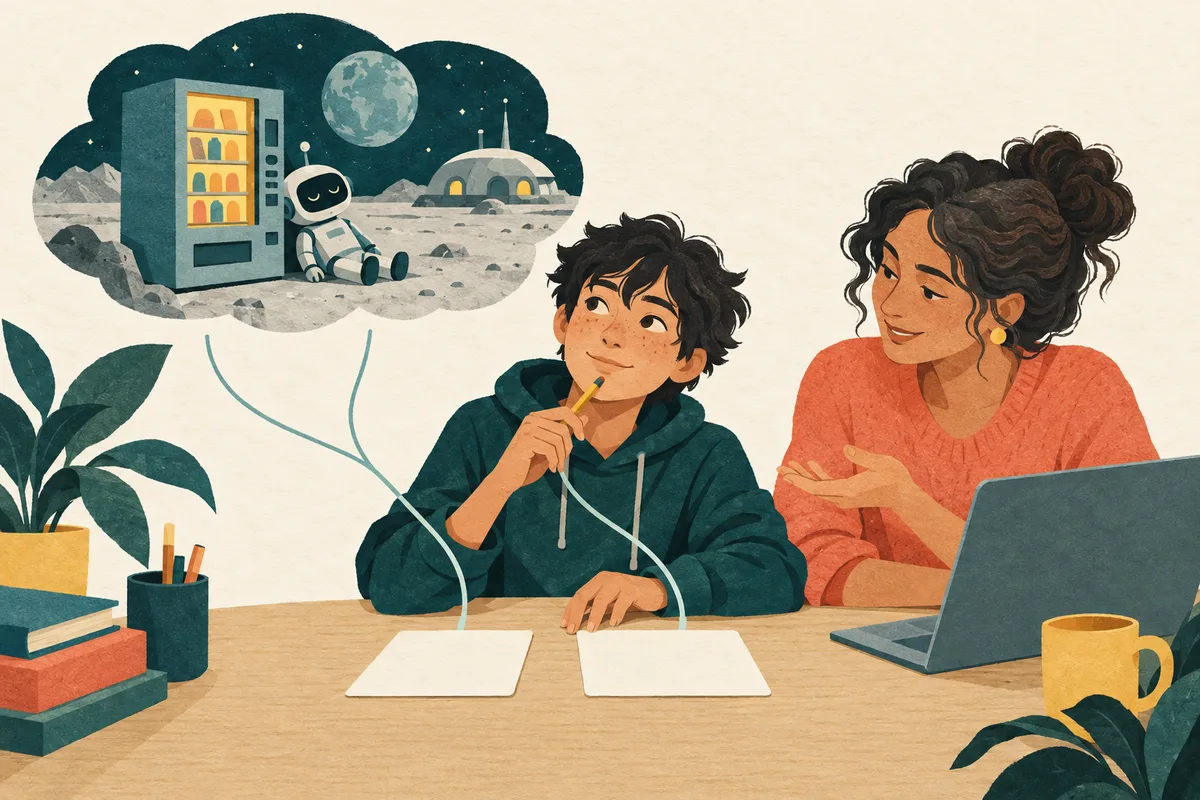
12 short steps with everyday scenes, words to adapt, and one action to try. Start at the beginning or choose the situation you need today.
Try one agreement with a part for each of you, one everyday task your child can take on, and one shared activity you both want to repeat.
These are options and suggestions. An idea may take more than one attempt, or may not suit your family. Start with an easier task, shorten it, or try another option. Your child does not need an account or another course to finish.
You can start with the time, energy, and materials you have today. Each step offers a brief version and examples for different ages.
Choose one sentence, one question, or one part of an everyday task. Try it while preparing food or on a familiar journey. You can pause the guide and return later; there is no missed-day count to catch up on.
Use paper you already have, music, a made-up story, or ingredients for a meal you were going to cook. Try a walk if it is accessible and enjoyable. You do not need a kit, paid class, new device, or special family outing.
If a calm conversation is possible, discuss one practical issue away from the child. Each adult can name what matters and suggest one manageable arrangement to try. Set a time to review it.
Do not ask your child to take sides, carry messages, or enforce another adult’s promise. If agreement is not possible, start with your own actions and explain clearly what applies when you are responsible. Only promise what you can follow through on.
This suggestion is for everyday disagreements. Intimidation or violence needs safety and support beyond a family exercise.
You can do a step with the adults and time available. One brief moment with one child counts. With siblings, take turns or let each choose a small role; the older child does not need to manage everyone.
Across homes, explain the routine where you are without comparing parents. Keep adult coordination with adults. Invite your child’s view about what helps them manage the change.
Age examples are starting points. Adjust for your child’s skills, communication, energy, and support needs. Asking for help is part of learning.
Try an everyday responsibilityContributor profiles and children’s survey responses will be added as the materials are gathered.
View this sectionPreview edition. Content is awaiting specialist review. Pricing and purchasing are not active.
This section is being prepared. Profiles, contributions, and approved quotations will be added here.
Choose a familiar moment. You can visit any step without completing the ones before it.
Or follow the guide in orderYou can feel disappointed, angry, proud, or unsure. Writing it down does not make it a judgment about your child.
Trying counts, even when the moment does not go as planned. Checkmarks stay in this browser.
Practical guides for parents. Read a little, try something in real life, and choose what fits your family.
Understand your own reactions, get curious about your child, and make room for shared time.
Explore the guideMake a tiny story with two endings. Your child chooses the idea, changes the draft, and tries it out with you.
Open the free guideЧитать по-русскиEvery step, copyable prompts, and a ready-made story. No purchase or registration on Future Ready.
The guides are for the adult. The conversations, experiments, and memories happen together, away from this page.